What Real Leadership Looked Like in 2025 – and Why 2026 Won’t Look Much Different
Leadership in 2025 wasn’t glamorous. It wasn’t inspirational TED-talk. It wasn’t “vision boards” and “empowerment slogans”.
It was pressure, complexity, and contradiction – and the best leaders were the ones who didn’t hide from that.
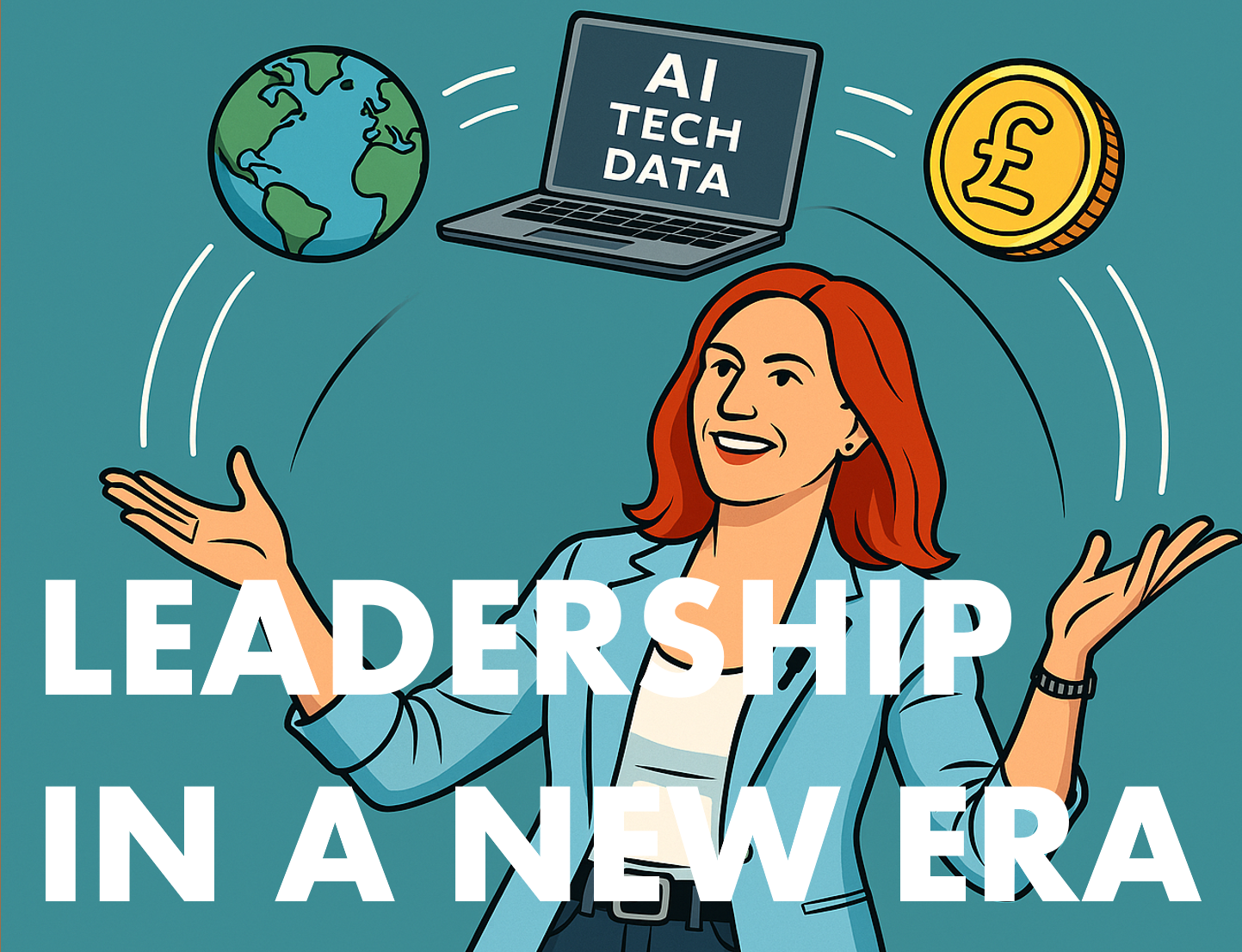
Looking back, the year was defined by three forces every leader felt, regardless of role, sector, or job title.
And the truth is simple: 2026 isn’t going to be dramatically different.
Let’s break it down.
1. A world divided – and leaders pulled into the middle of it
2025 was the year geopolitical and economic fracture became part of everyday leadership.
Even leaders without global roles felt it.
The world became louder, more divided, more anxious and more opinionated – and that seeped into workplaces.
People brought strong views about politics, global conflicts, culture, identity, and fairness straight into meetings, decisions, and team dynamics.
Leaders had to navigate:
-
teams with competing values
-
heightened emotional responses
-
a wider sense of instability
-
the constant pressure to “take a stance”
-
the risk of alienating one group by reassuring another
And on top of that – the pressure to keep their own heads straight.
2025 demanded emotional maturity, self-control, and communication discipline.
And guess what?
2026 will demand even more.
Because society isn’t suddenly becoming calmer or more unified.
Leaders will still be asked to create psychological safety in an environment where no one agrees on what that even means anymore.
2. Growth didn’t happen – and margin took the hit
For all the optimism at the start of 2025, growth didn’t arrive.
Investment stayed hesitant.
Capital stayed cautious.
And costs… well, costs kept rising.
So what happened?
Margin got squeezed.
Hard.
Most businesses operated with fewer people doing more work, and productivity didn’t magically increase – even with the influx of AI tooling.
Let’s be honest:
-
AI added cost
-
AI added complexity
-
AI added workload
-
And at best, AI kept things cost-neutral
It didn’t deliver the productivity leap the hype machine promised.
Not yet.
So leaders had to find value in operational discipline – clarity, focus, standards, delivery, prioritisation.
They had to make tough calls, and they had to do it with shrinking buffers.
2026 won’t be an easier economic year.
We’ll still have tight margins, constrained budgets, and expectations that don’t match resources.
Good leaders will need commercial sharpness – not just empathy – to survive this shift.
3. Technology moved faster than leadership structures could keep up
The biggest shift of 2025 was one we’re still underestimating:
non-technology leaders became the loudest drivers of AI adoption.
That has never happened before.
The traditional model was:
The business asks.
Tech delivers.
Data supports.
Security protects.
In 2025, that flipped.
Boards, HR teams, Finance leaders and operational heads demanded AI adoption faster than the technology, data, engineering, and cyber teams could safely handle.
Tech leaders spent the year navigating:
-
messy and immature AI products
-
rising cyber threats
-
increased regulatory scrutiny
-
massive data quality issues
-
a spike in “shadow AI”
-
pressure to produce “innovation” on command
Suddenly, all leaders had to become both people leaders and technology leaders.
There was no hiding behind “I’m not technical”. That excuse expired.
And in 2026, technology – especially AI – will move even faster.
Leaders who refuse to build digital confidence will fall behind.
Leaders who refuse to understand cyber risk will expose their organisations.
Leadership capability and technology capability are now linked.
There is no gap.
Only friction.
So what did real leadership look like in 2025?
Strip away the noise and the expectations, and it came down to three behaviours that actually mattered:
1. Leaders adapted – but didn’t drop standards
Flexibility was essential, yes – but adapting to every preference and every worldview was impossible.
The strongest leaders set high common-denominator standards, not lowest-common-denominator compromises.
They communicated clearly, aligned their teams, and held the line when needed.
People respected clarity more than niceness this year.
2. Leaders became more commercially focused
Not because they wanted to – because the world forced it.
Revenue matters.
Margin matters.
Cost discipline matters.
Risk matters.
Technology and data maturity matter.
You can care deeply about people and still run a commercially sharp organisation.
In fact, that combination is what sustained businesses through 2025.
In 2026, this balance will become non-negotiable.
3. Leaders had to build capability across three domains simultaneously
No one gets to be “just” a people leader anymore.
No one gets to be “just” a technology leader.
No one gets to be “just” a commercial leader.
Real leadership in 2025 required competency across all three:
People leadership: Communication. Empathy. Standards. Psychological safety without appeasement.
Technology and data leadership: Understanding AI. Understanding cyber. Knowing what good looks like in architecture, delivery, and operations.
Business and commercial leadership: Clear strategy. Cost awareness. Revenue engines. Margin protection. Risk understanding.
That will remain the reality in 2026.
Leadership roles aren’t getting simpler – they’re getting broader.
So what now?
If 2025 showed us anything, it’s that leadership capability needs to evolve – fast.
We need leaders who:
-
can navigate conflict without losing clarity
-
understand technology and AI enough to lead with confidence
-
can translate business strategy into delivery
-
can create teams that move fast without breaking themselves
-
can handle the relentless pace of change without burning out
Which means investing in:
-
technology confidence
-
commercial understanding
-
people leadership skills
-
broader industry knowledge
-
and, crucially, the ability to pause, reflect and recharge
Because leadership in this environment is exhausting – and relentless.
You cannot sustain this pace without conscious recovery.
2026 will bring more of the same pressures: geopolitical instability, economic caution, accelerating technology, and rising expectations.
The leaders who thrive will be the ones who continue to build capability across people, business and technology – and who make space to breathe, learn and grow.
The world isn’t slowing down.
But leadership doesn’t have to feel chaotic.
With clarity, capability and confidence, it can feel purposeful.